The best coloring books for seniors are large print, with thick outlines, big open shapes and one design per page, printed single-sided so markers can't ruin the next picture. Just as important, the subjects should be adult and familiar, such as birds, kitchens, hymns, gardens and sewing, rather than cartoons or children's themes.
Books in this article
Most adult coloring books were never designed with older eyes or hands in mind. The lines are thin and gray, the spaces are tiny, and the subjects are either intricate mandalas or children’s cartoons. Neither works for most seniors. Here is what to look for instead, and how to match a book to the person.
Six things to check
1. Large print, with thick, dark lines. You should be able to see every outline at arm’s length. Gray or hair-thin lines disappear under low light and aging eyes. Look at a sample page before buying; the cover rarely tells you.
2. Big, open shapes. Each space should be large enough to fill with a few strokes of a marker. Shapes smaller than a fingernail, packed by the dozen, turn coloring into a test of precision.
3. Adult, familiar subjects. This is the one most gift-buyers miss. Easy lines and childish pictures are not the same thing. A cardinal at the feeder, a hymn, a kitchen, a sewing machine or a porch gives a grown person something to recognize, and something to talk about.
4. One design per page, single-sided. Markers bleed through book paper. If another design is printed on the back, it gets ruined. Single-sided books avoid that, and a finished page can be cut out and framed.
5. A comfortable size. An 8.5 x 8.5 inch square book sits on a lap or a wheelchair tray. An 8.5 x 11 inch book gives a bigger picture but wants a table.
6. Something to finish. A page that can be completed in one sitting gives a real sense of accomplishment. A page abandoned halfway gives the opposite.
Match the book to the person
There is no single best coloring book for seniors, because seniors are not one person. A few starting points from our own shelf:
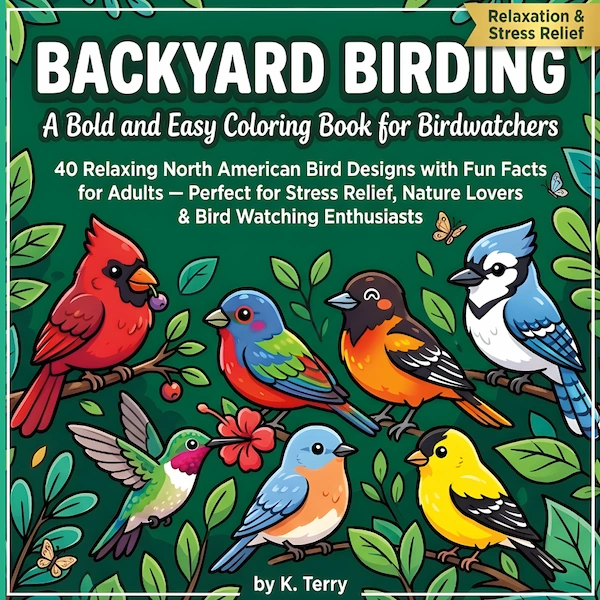
- For the bird lover: Backyard Birding, forty North American birds, each facing a short “Did you know?” fact to read aloud.
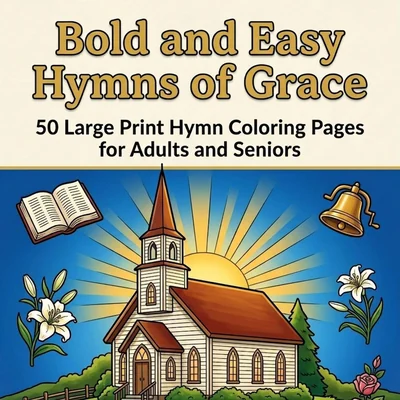
- For church folks: Bold and Easy Hymns of Grace, fifty beloved hymns in big letters above simple country scenes.
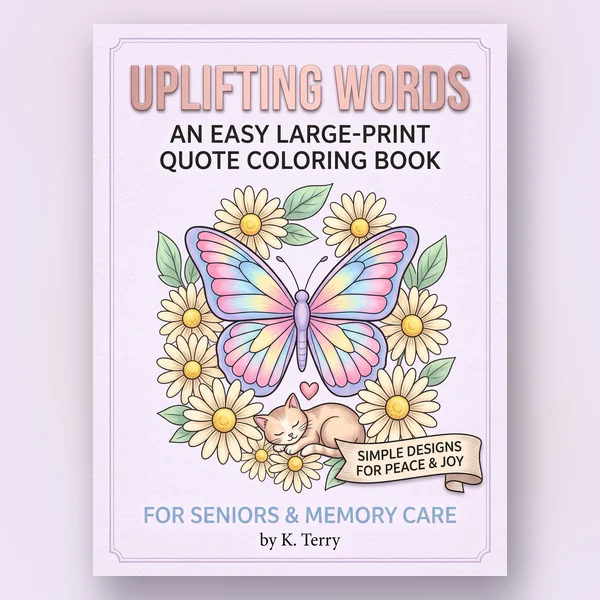
- For memory care and low vision: Uplifting Words, forty short phrases in big outlined letters, one of the boldest books we make.
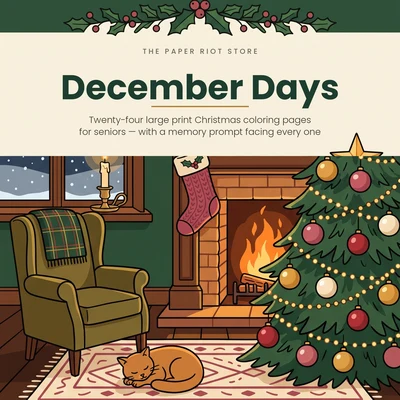
- For reminiscing: December Days, Christmas pictures each paired with a memory question.
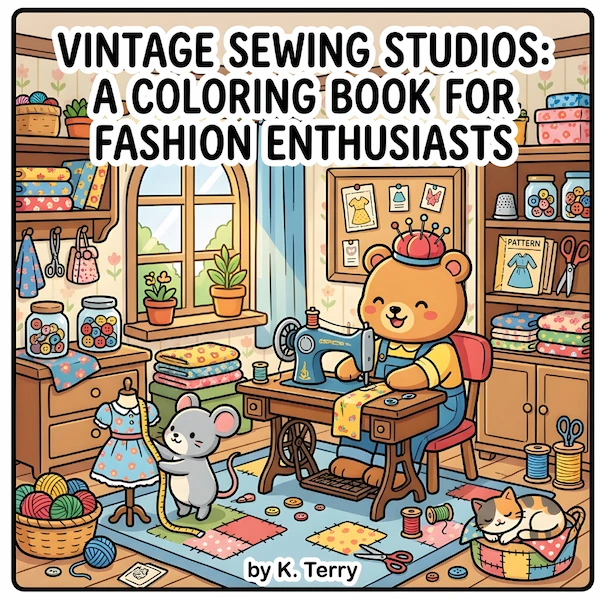
- For someone who sewed: Vintage Sewing Studios, sewing machines, dress forms and sewing rooms.
- For someone who would rather do puzzles: our large print activity books, word searches and sudoku with the letter sizes stated in millimeters.
Seniors with dementia
Everything above matters even more for someone living with dementia: bolder lines, simpler scenes, and above all subjects that are adult and familiar. The Alzheimer’s Association advises keeping activities on an adult level and avoiding anything that might seem childlike. We’ve written a full guide to choosing a dementia coloring book.
Seniors with low vision
For macular degeneration, cataracts or simply aging eyes, contrast and size do most of the work: solid black lines on white paper, big shapes, and good light. See coloring books for low vision for more.
What to color with
Markers are usually the easiest choice for older hands. A chisel tip fills a large shape with almost no pressure, whereas colored pencils need a firm grip to get a strong color. Our guide to markers for coloring books has specific picks. A chunky triangular pencil is a good alternative for anyone who prefers to shade.
Try before you buy
The surest test is a real page. We publish a free printable sample page from every book. Print one, sit down together, and see whether the lines are bold enough and the subject lands. If you would rather print pages as you need them, every book is also sold as a printable PDF.
Questions people ask
What makes a coloring book good for seniors?
What are good coloring books for seniors with dementia?
Are large print coloring books too childish for older adults?
What size coloring book is best for the elderly?
Markers or colored pencils for seniors?
Are there free coloring pages for seniors?
Large print books for older colorists
Bold lines, adult subjects and a free sample page from every book.
Browse the Books