
Visit at the time of day your parent is usually at their best, which for many people is late morning or lunch rather than evening. Keep it short, keep the group small, and bring one quiet thing the two of you can do together. Don't test their memory, and plan how you'll leave before you arrive.
Books in this article



The visit you’re planning is probably an hour long, at most, and you’ve likely been thinking about it for weeks.
Most of the advice out there about dementia at Christmas is written for the person hosting it. Keep the decorations simple, make a quiet room, watch the noise. That’s good advice. It’s also no use at all if you’re the one getting in the car, walking into a care home or your dad’s kitchen, and trying to make one hour count.
So this is for you. The visitor.
Go at lunchtime, not for dinner
The instinct is to visit for Christmas dinner, because that’s when Christmas happens.
It’s often the worst time to go. Late afternoon and evening are hard for a lot of people with dementia: they’re tired, the light’s going, and things that were fine at eleven aren’t fine at five. The Alzheimer’s Association says it simply: celebrate over lunch or brunch, rather than an evening meal.
The National Institute on Aging says to plan outings for the time of day when the person is at their best, and a visit is no different. You may not know when that is anymore. Somebody does.
Call ahead and ask one question
If your parent is in a care home, call the week before and ask: how has she been this week, and when is her good part of the day?
That’s the whole call. The answer tells you what time to arrive, and it tells you who you’re likely to meet when you get there, which is the part that’s hard to brace for if nobody warns you.
If a brother or sister lives nearby and sees her more often, ask them the same thing. And believe them, even if it’s not what you hoped to hear.
Keep it small
One or two of you. Not the whole family at once.
I know that’s a hard one at Christmas, when everybody wants to go and everybody has a right to. But a room with six people talking over each other is a lot for someone whose brain is already working hard to keep up. Take turns. Stagger it across the day or across the week. The NIA’s own holiday advice is to limit the number of visitors at any one time, and that holds even when every one of them means well.
Bring something for your hands
This is the bit I’d push hardest, because it’s what makes the hour work.
Conversation with someone who has dementia can run out fast. Not because there’s nothing to say, but because the usual questions (“what have you been up to?”) have answers that have gone missing. And then you’re both sitting there, and the TV is on, and you check the time.
Having something to do together changes that. You’re not carrying a conversation anymore. You’re both looking at the same thing, and talk can come and go around it.
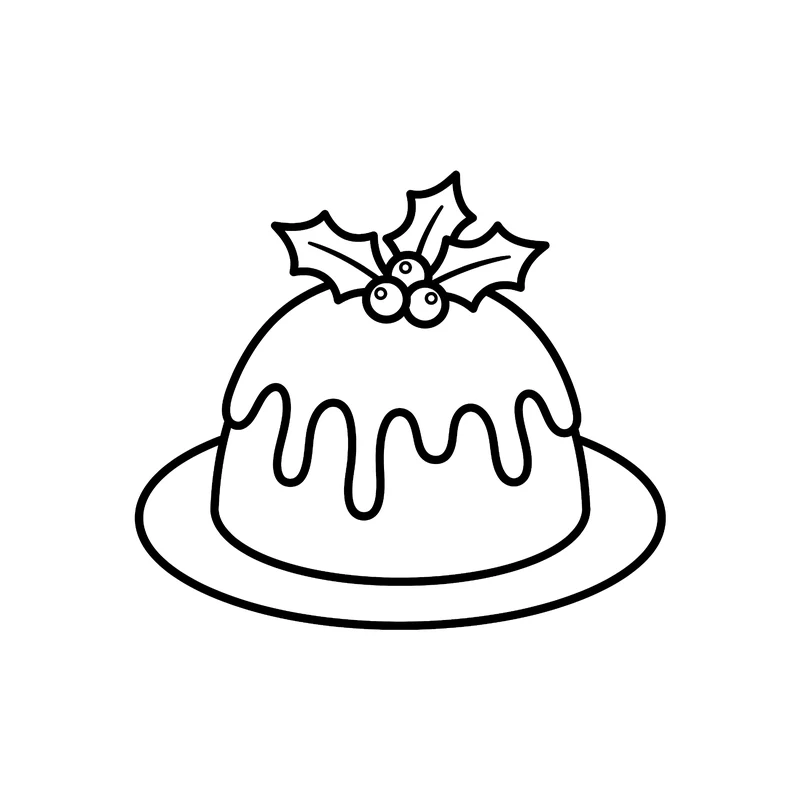
That’s why I made December Days the way I did. I was thinking about care homes, and about the hour a family spends visiting when nobody quite knows what to say. So every one of the 24 pictures has a memory prompt printed on the facing page, opposite the drawing rather than under it. One person colors. The other one reads the question out.
I also put all 24 prompts together on two pages at the back. That part’s for you, the visitor. You can glance at them in the parking lot and walk in with a question in your pocket.
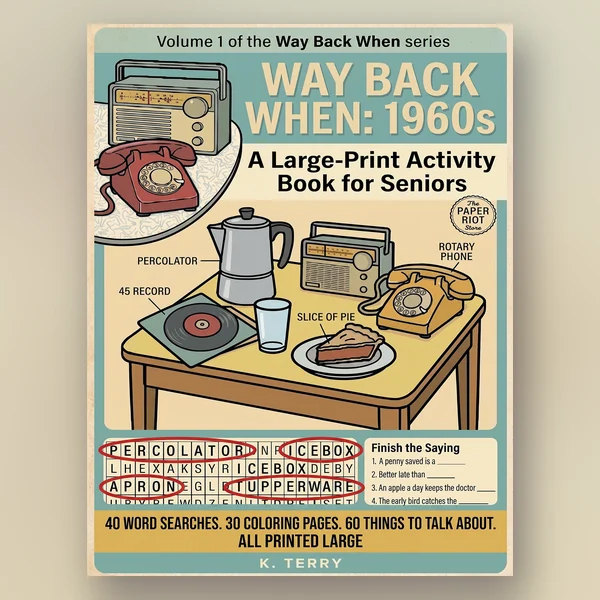
If Christmas isn’t the right subject, Bold & Easy Winter has a friendly question facing every picture and no holidays at all, Way Back When: 1960s works the same way for a different decade, and Hymns of Grace suits a parent who spent every Sunday in church.
Ask “tell me about,” never “do you remember”
How you ask matters more than what you ask.
“Do you remember Christmas at Grandma’s?” has a right answer. Not knowing it is a small failure, and she’ll feel it. “Tell me about Christmas when you were little” has no right answer at all. Whatever comes back is the right answer, even if it’s a story about a dog from 1958.
I’ve written more about why that one word changes everything, with guidance from a university memory center that puts it better than I can.
If she doesn’t know who you are
You might walk in and not be recognized. You might be called by your aunt’s name. You might be greeted warmly as a nice stranger.
Introduce yourself plainly, name and all: “Hi Mom, it’s your daughter.” Don’t follow it with “do you know who I am?” It’s not a fair question, and neither of you will enjoy the answer.
The NIA puts it in one line I’d want every visitor to read in the car: the person may not always remember who the visitor is, but they often enjoy the company. She may not remember the visit. She can still have a good hour in it.
Plan the leaving before you arrive
Nobody talks about this part, and it’s often the hardest.
Goodbyes can be upsetting, sometimes more than the visit was good. A long, emotional farewell can leave her unsettled for the rest of the afternoon, after you’ve gone and can’t help.
So keep it short and ordinary. Ask the staff the best way to leave and when; some homes would rather you go while lunch is being served or an activity is starting, so there’s something to turn toward. Leave the coloring book and the pencils behind. Somebody can pick it up again on Tuesday.
For the one who drives home
If you’re the one in your family who noticed first, you might be the one who visits most, and the one who feels it most on the way back.
I cared for both my parents for seven years, mostly on my own. Someone in my own family told me, “Stop being emotional. She’s just getting forgetful.” I wrote You’re Not Overreacting for whoever is hearing some version of that right now. If you’re the one stretched between your parents and everything else, it’s for you too.
Christmas tends to be when the gap between how things were and how things are gets hardest to ignore. You don’t have to fix that in one visit. You only have to make the hour you’ve got a decent one.
Go at lunch. Bring something for your hands. Leave before anyone’s tired.
Questions people ask
What time of day is best to visit a parent with dementia at Christmas?
How long should a Christmas visit be?
What if my parent doesn't recognize me at Christmas?
Should I bring my parent home from the care home for Christmas?
You're Not Overreacting
Seven years caring for both my parents, mostly on my own, and everything I wish somebody had told me in that kitchen. Kindle, paperback and hardcover.
Read about the book