
Free AI toolkit for small churchesYou’re not behind.
You’re tired.
The free printable toolkit from AI for Small Churches: checklists, a church AI policy your board can actually approve, and one-page guides to print, tape by the office phone, and hand to the volunteer who said yes to everything.
PDF · 13 pages · no sign-up, no email, nothing to join.
“AI can carry the paperwork. It can never carry the presence.”
From AI for Small Churches
Free
Every worksheet in the book, full size
Print as many as you need for your own church. Fill them in, mark them up, give them away. Yours whether you buy the book or not.
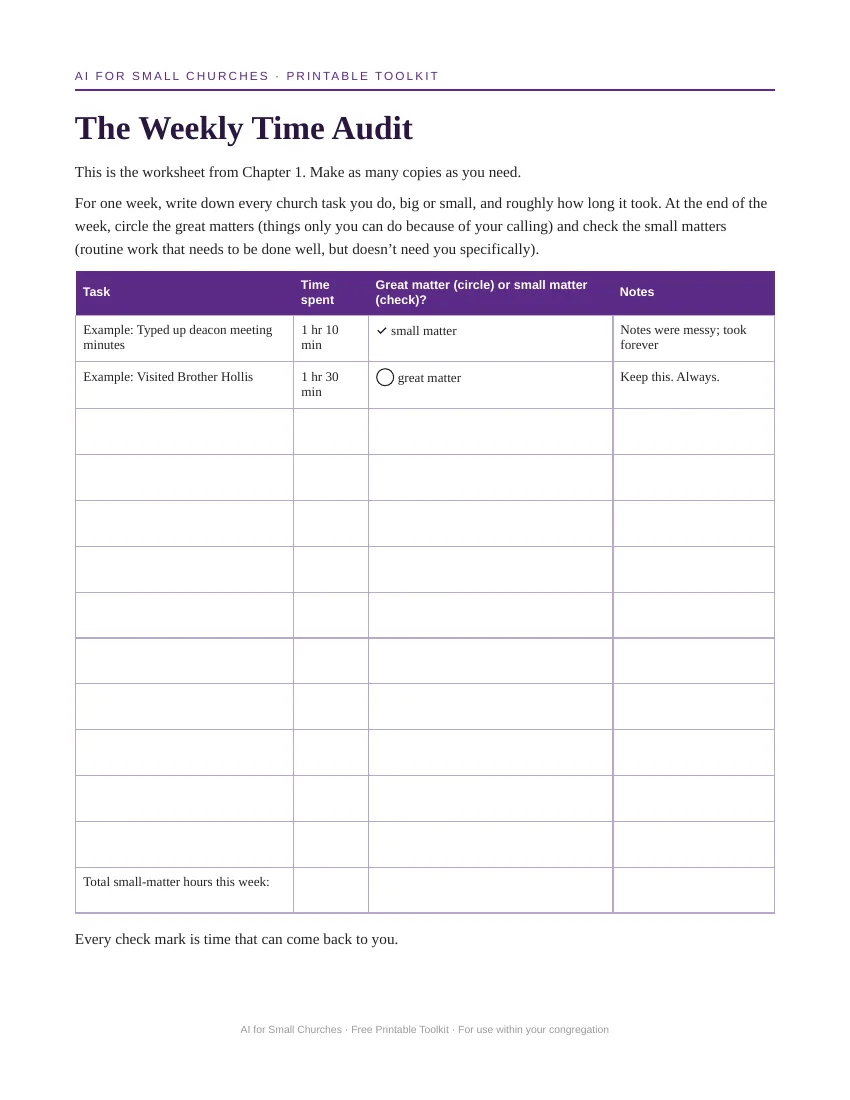
- The Weekly Time Audit
Find the ten hours. Sort the great matters from the small ones. - The Pulpit Line Self-Check
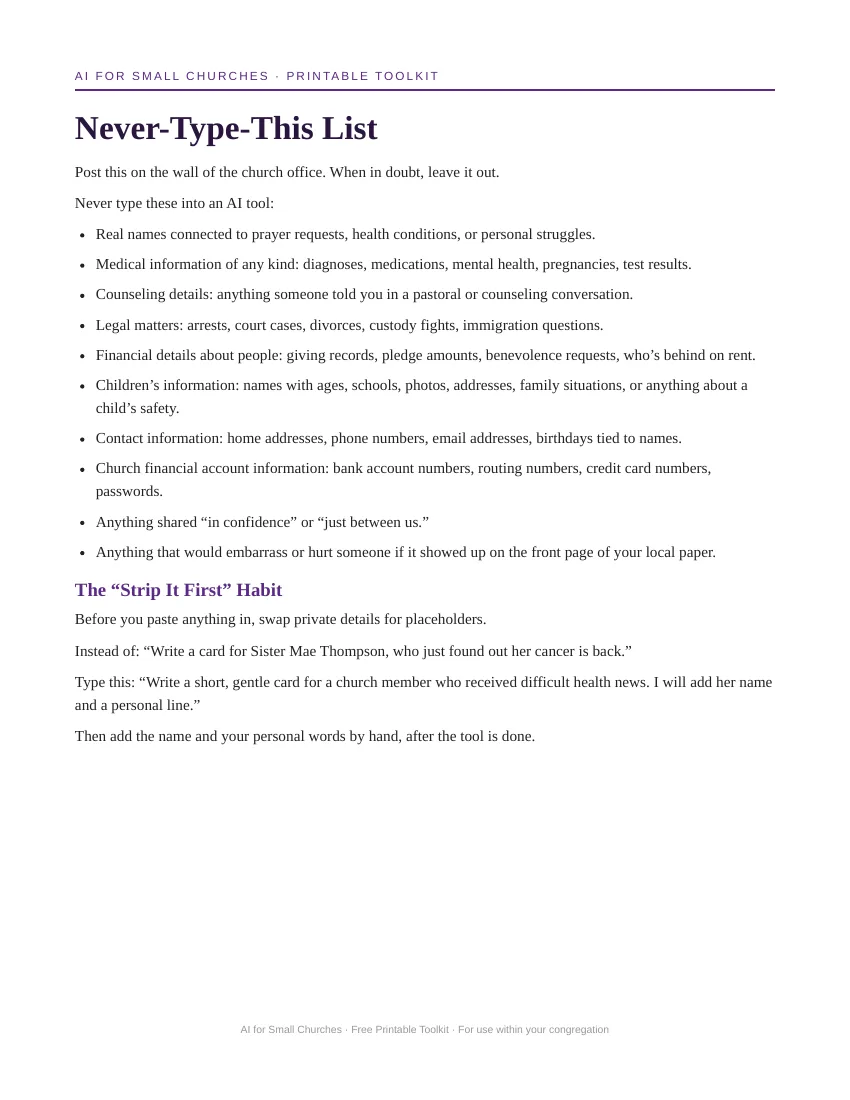
Five questions that tell you where AI helps and where it never belongs. - The Never-Type-This List
The privacy list for the office wall, plus the “strip it first” habit. - The Quick-Start Card
Eight steps for the nervous first-timer. Laminate it. - The Church Voice Profile
Fill it in once so everything sounds like your church, not a machine. - The Church AI Policy
A fill-in-the-blank policy your board can actually approve. - The 4-Week Content Calendar
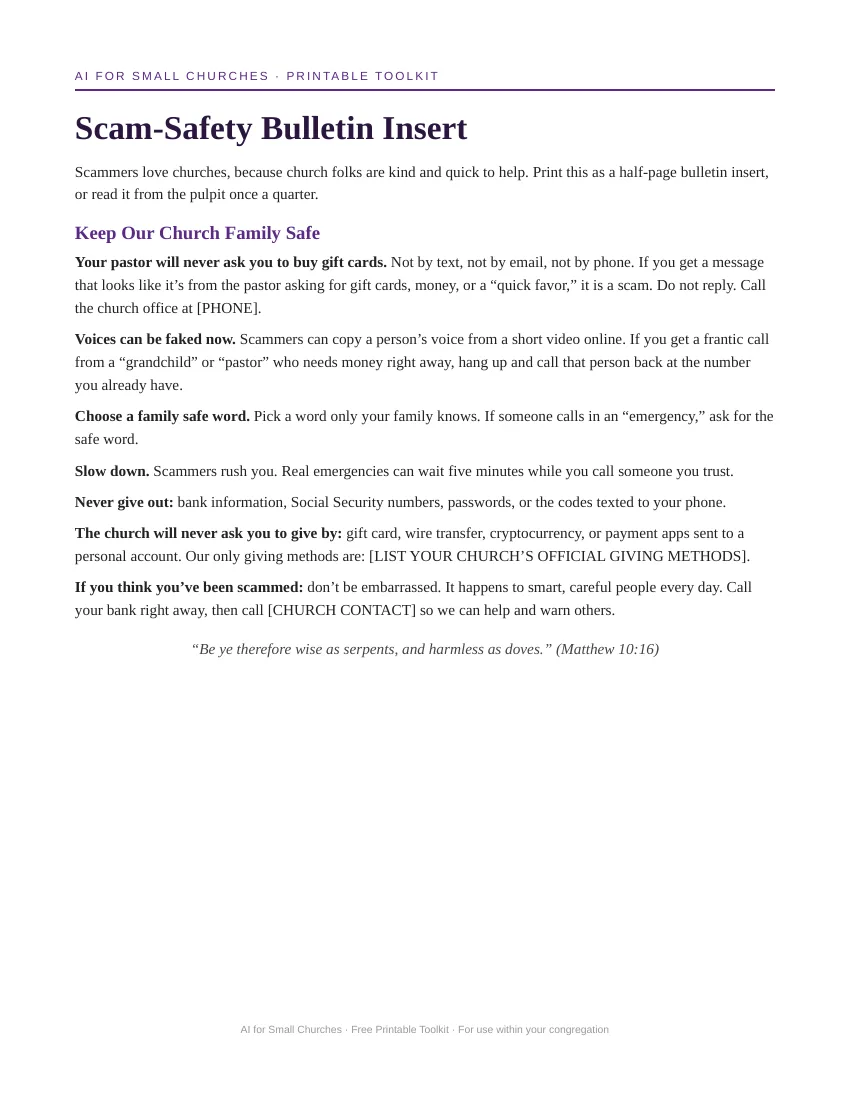
Blank, plus a filled-in example month. - The Scam-Safety Bulletin Insert
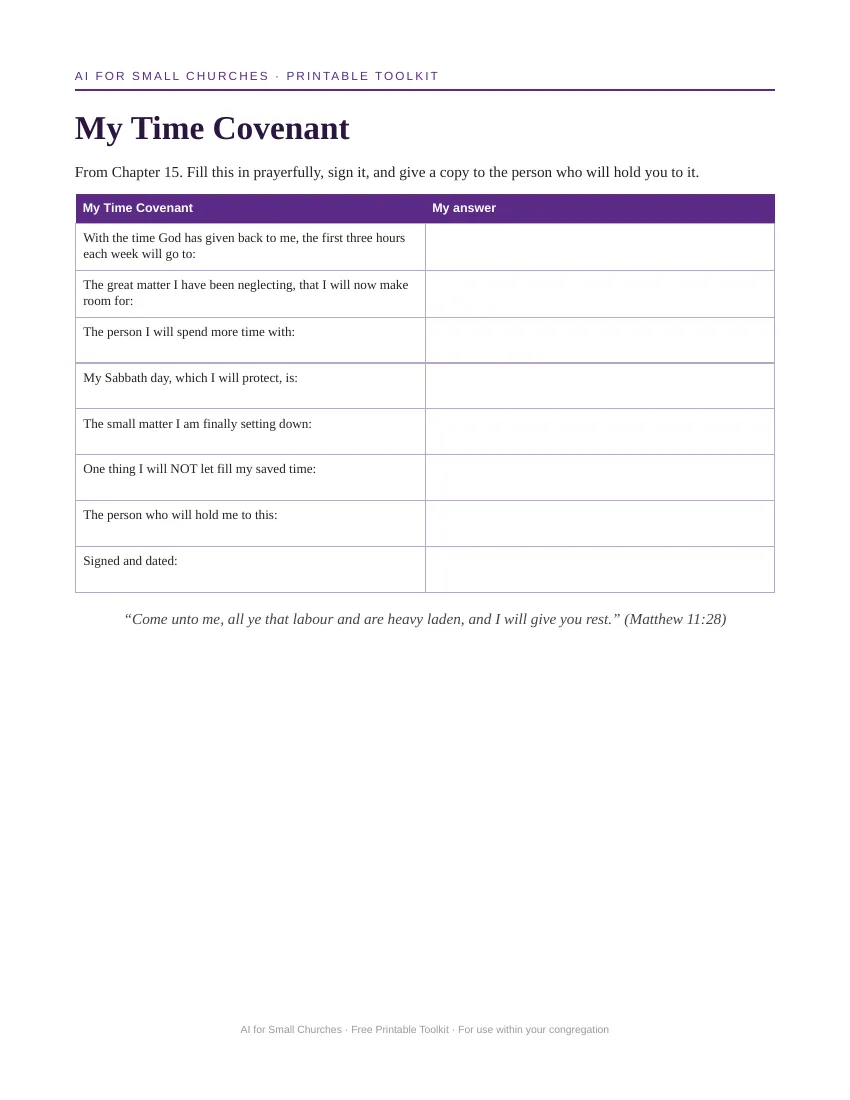
“Your pastor will never ask you to buy gift cards.” - The Time Covenant
What you will do with the hours you get back. Signed and dated. - Photo Permission Form
Before anybody’s picture goes on the church Facebook page.
PDF · 13 pages · opens in a new tab
AI for Small Churches
For the pastor finishing the bulletin at midnight
Small-church ministry runs on Saturday nights and leftover hours. The bulletin. The minutes. The welcome letters. The volunteer schedule that falls apart every time someone’s grandbaby gets sick. None of it is unholy work, but all of it steals time from the hospital room, the study, and the people you love.
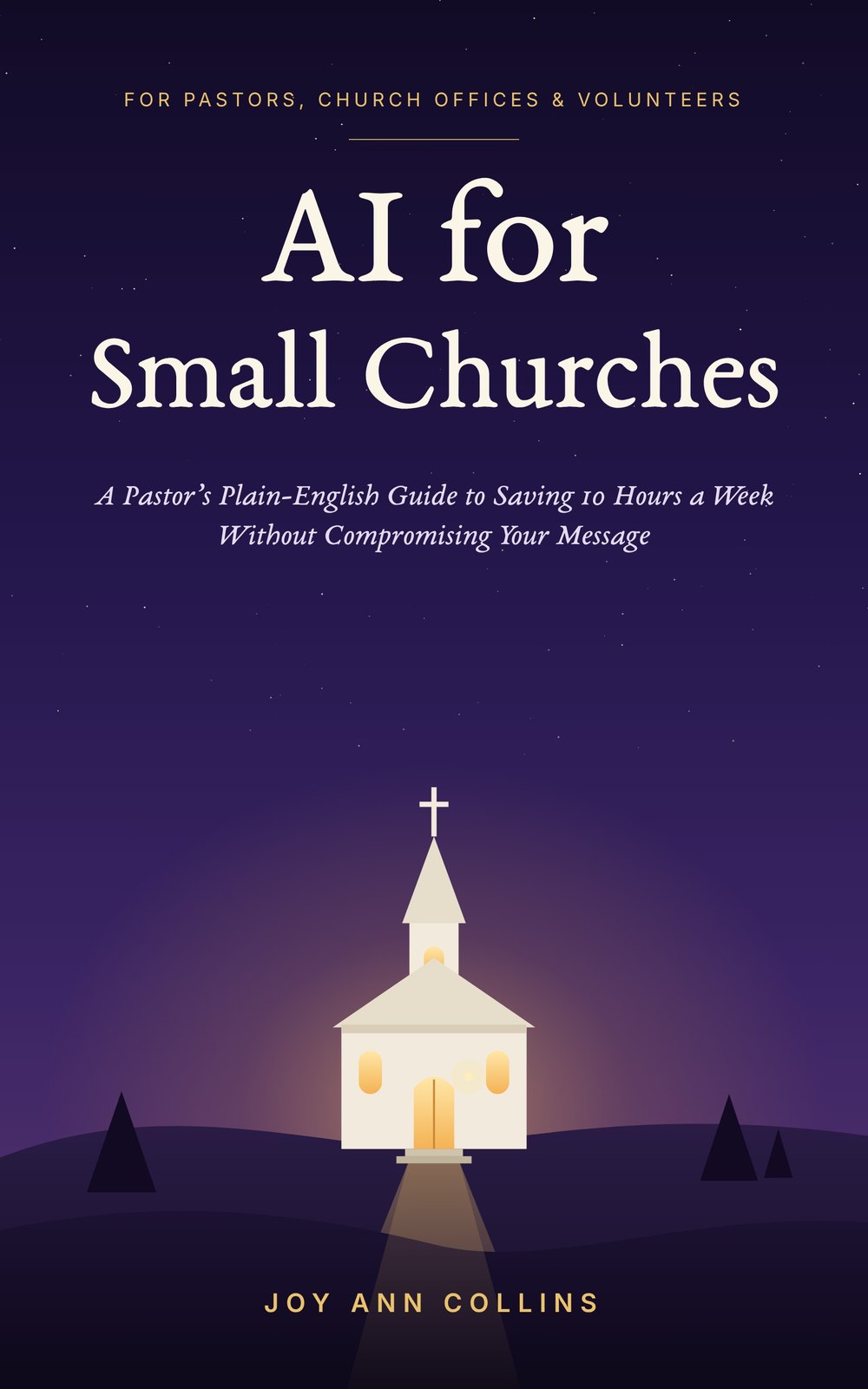
A warm, plain-English guide for pastors, church offices, and volunteers to handing the small matters to a tool, so they can give their best to the great ones. It takes the worries seriously first, then shows what to do on Monday morning.
- The Pulpit Line: where AI can help, and where it never belongs
- Getting set up in thirty minutes, even if you’re “not a tech person”
- The CALL method, so it sounds like your church and not a timeshare commercial
- Chapters for the church office, the pastor’s study, volunteers, and care teams
- Protecting your members’ privacy, and your church from gift-card scams
- Sample wording for bringing it to your board and your congregation
Coming soon to Amazon in Kindle, paperback, and large print.
For your church family
For the shut-in visit and the fellowship hall
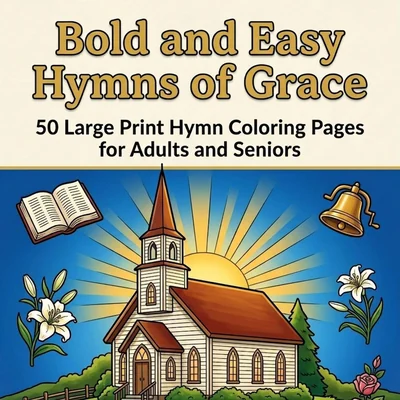
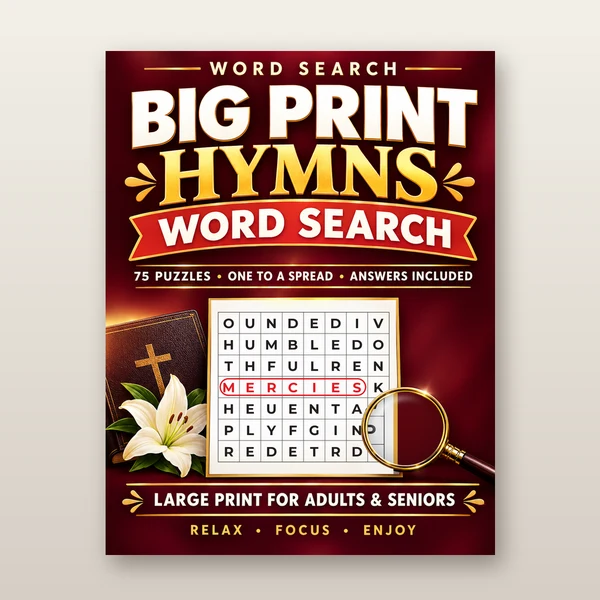
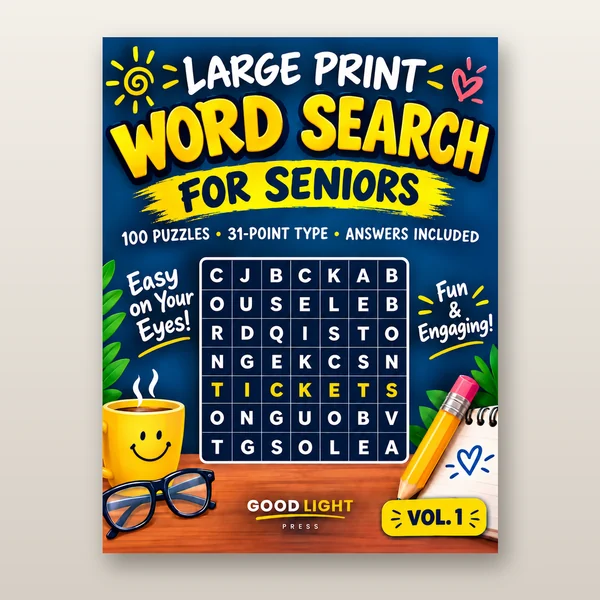
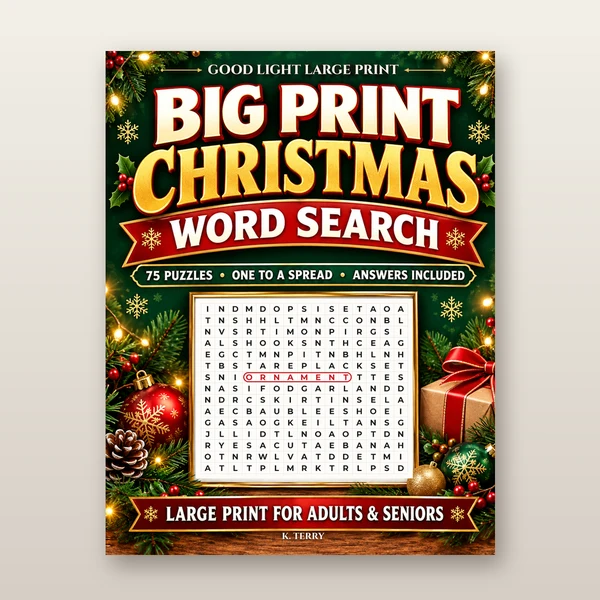
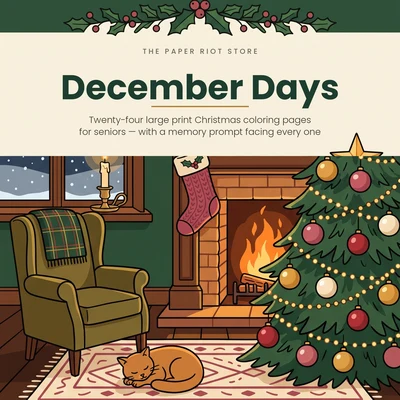
Large-print hymn coloring, word searches, and gentle pages made for older hands and unhurried afternoons. Easy gifts for the sick-and-shut-in list, the senior saints’ luncheon, or the women’s ministry table.

Questions
What pastors ask first
Is it okay for a pastor to use AI to write sermons?
Not in this book. AI for Small Churches draws what it calls the Pulpit Line: AI may help with the work around your ministry, but it must never become the voice of your ministry. It should not write your sermon or large parts of it. It can help the way a concordance or commentary always has, with information you check, while the praying, the study, and the preaching stay yours.
Is it safe to put church member information into ChatGPT or other AI tools?
Not anything private. Never type real names connected to prayer requests, health conditions, or personal struggles, any medical information, anything shared in counseling, or anything about a child. Describe the situation in general terms instead; that is all the tool needs. Use a church email account for church work and check the privacy settings before you start.
What should a church AI policy include?
A simple church AI policy can fit on one or two pages. It should say what the church may use AI for, what it will never be used for, what may never be typed into an AI tool, the rule that every scripture, name, date, and number gets checked, and who may use it on the church’s behalf and whose account it is. The free toolkit includes a fill-in-the-blank version. It is a plain-language starting point, not legal advice.
How can a small church save time with AI?
By handing AI the small matters: bulletins, announcements, meeting minutes, welcome letters, newsletters, social media posts, and volunteer schedules. You still read and check every word. The book walks through a bivocational pastor’s week to show how those tasks can add up to as much as ten hours; your own numbers will be different.
Does a church need to pay for AI tools?
No. Most AI tools, including ChatGPT, Claude, Gemini, and Copilot, have a free version that is plenty for church office work. Start free; you can always upgrade later if your church decides it is worth it.
How can a church protect members from AI voice and text scams?
Teach everyone the three warning signs: urgent, unusual, and secret. Verify before you pay by calling the person back at a number you already know. Choose a safe word that only your staff or family know. The toolkit includes a scam-safety bulletin insert that tells your congregation your pastor will never ask them to buy gift cards.
Is the AI for Small Churches toolkit really free?
Yes. It is a 13-page printable PDF with no sign-up and no email required. Print as many copies as you need for your own congregation, whether or not you buy the book.
Who wrote AI for Small Churches?
Joy Ann Collins, an independent publisher in Kansas City, Missouri, and the founder of Small Matters Press. The book is written for pastors, church secretaries, and volunteers at small churches of every tradition, and it quotes Scripture from the King James Version.
One honest note
These printables are for use within your own congregation. The policy template and forms are plain-language starting points, not legal or tax advice; if your denomination or your church’s attorney has its own versions, use theirs.
AI tools, their settings, and their policies change often, so check anything you plan to rely on. Scripture quotations are from the King James Version.